
Projects Funded in India
Since 2000
Maximum Grant Per Project
SDGs Impacted
Women, Youth & Indigenous
The GEF Small Grants Programme (SGP) empowers communities and civil society to protect the environment while improving lives.
Implemented by Global Environment Facility, SGP is a crucial support system for locally-led solutions that build climate resilience, conserve biodiversity, and promote sustainable livelihoods. Working across India, SGP strengthens grassroots leadership to deliver local and global environmental benefits.
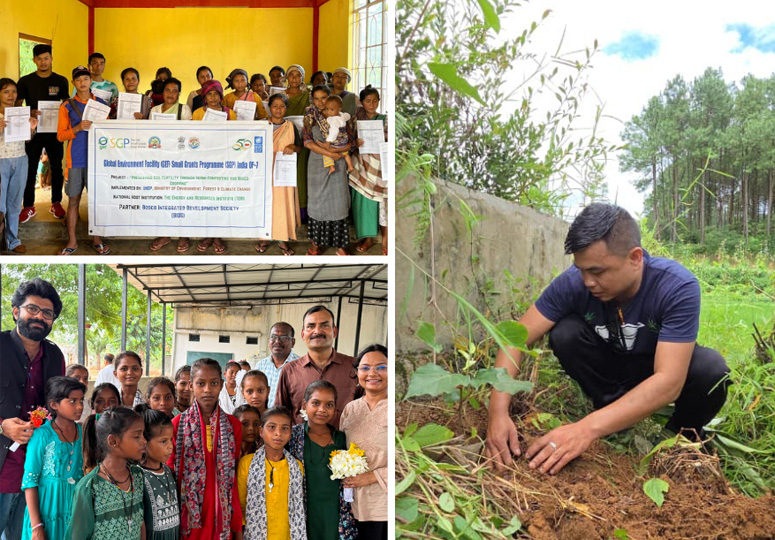
India represents just 2.4% of the world's land area yet supports nearly 18.45% of the global population and hosts one of the richest assemblages of terrestrial, freshwater, coastal, and marine biodiversity. As the country advances towards Viksit Bharat@2047, increasing pressures from climate change, biodiversity loss, land degradation, rapid urbanisation, and unsustainable resource use present significant challenges for both ecosystems and communities. Building resilient landscapes and seascapes through locally led, inclusive, and innovative solutions has therefore become central to achieving sustainable and equitable development.
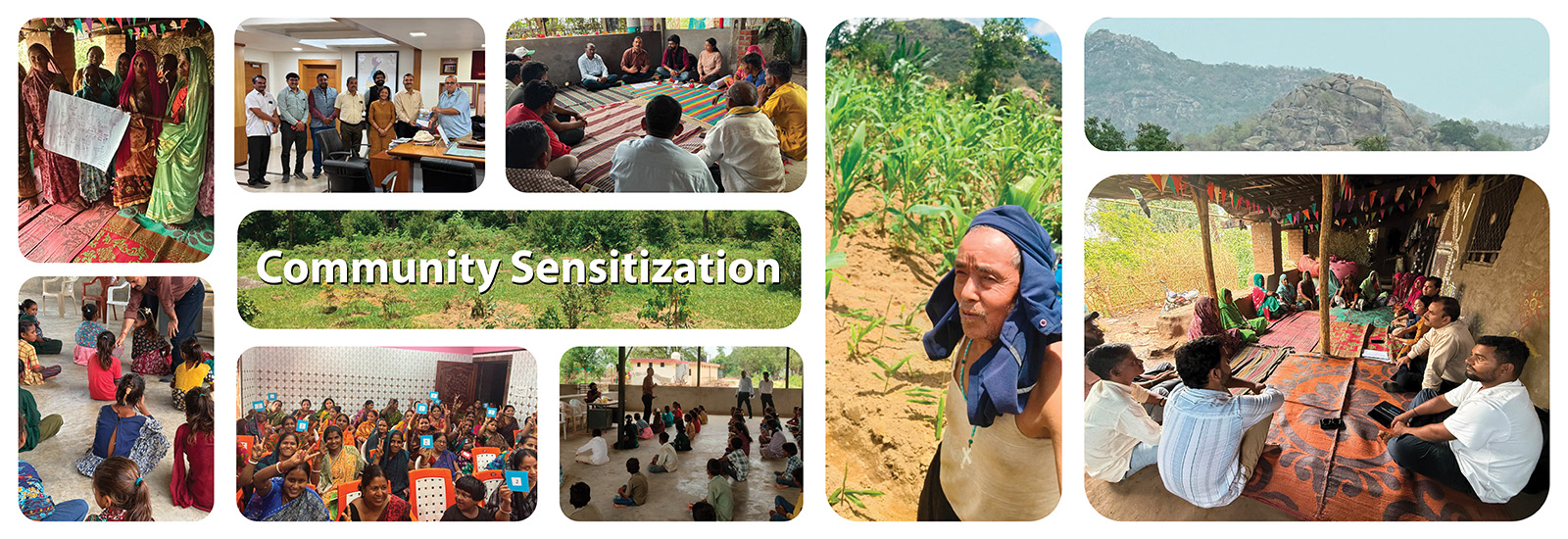
For over three decades globally and nearly three decades in India, the GEF Small Grants Programme (SGP) has empowered civil society organisations (CSOs) and community-based organisations (CBOs) to address global environmental challenges while strengthening local livelihoods. Building on the achievements of previous operational phases, SGP India Operational Phase 8 (OP8) advances integrated landscape and seascape approaches that connect grassroots innovation, knowledge, partnerships, and catalytic financing to generate measurable environmental, social, and economic outcomes. The programme aligns community action with India's national development priorities and international environmental commitments, ensuring that local solutions contribute to transformational change at scale.
Strengthen socio-ecological resilience through integrated landscape and seascape approaches.
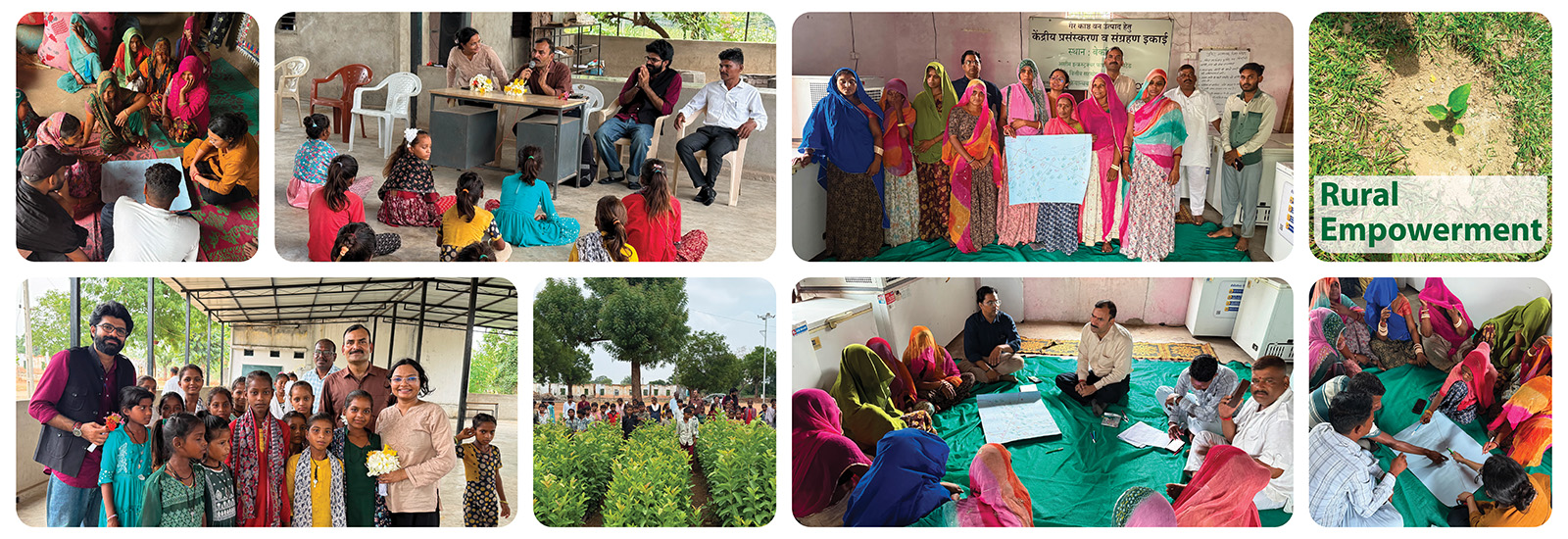
Empower CSOs, CBOs, women, youth, Indigenous Peoples, and forest-dependent communities as leaders of environmental action.
Promote community-led conservation, ecosystem restoration, and climate adaptation using nature-based solutions.
Enhance sustainable and climate-resilient livelihoods through innovation, green enterprises, and circular economy approaches.
Build capacities through learning-by-doing, technical assistance, knowledge exchange, and peer learning.
Catalyse innovation, demonstration models, and pathways for replication and scaling.
Foster multi-stakeholder partnerships across government, academia, private sector, financial institutions, and development organisations.
Leverage complementary financing mechanisms, including microfinance and other strategic partnerships, to expand community impact.
Generate measurable local and global environmental benefits while contributing to inclusive and resilient development.
The programme is implemented with the support of the Ministry of Environment, Forest and Climate Change (MoEF&CC), Government of India, in partnership with the United Nations Development Programme (UNDP). The Energy and Resources Institute (TERI) serves as the National Host Institution (NHI), coordinating implementation through strategic partnerships, knowledge management, capacity development, and community-driven innovation.
SGP India OP8 complements flagship Government of India initiatives—including Mission LiFE, National Mission for Sustainable Agriculture (NMSA), Green India Mission (GIM), National Rural Livelihoods Mission (NRLM), Jal Shakti Abhiyan, PM-KUSUM, and MGNREGA—while contributing to India's commitments under the Sustainable Development Goals (SDGs), Nationally Determined Contributions (NDCs), the Kunming–Montreal Global Biodiversity Framework (KMGBF), and the United Nations Convention to Combat Desertification (UNCCD).
Area of land restored
Area of landscapes under improved practices
Area of marine habitat under improved practices
Greenhouse Gas Emissions mitigated / avoided
Direct Project Beneficiaries
7,500 Female · 7,500 Male
The Biodiversity Conservation projects encourage the protection and sustainable management of ecosystems for their effective restoration while generating employment opportunities for the vulnerable sections of society.
Climate change initiatives will advance both adaptation and mitigation efforts by overcoming economic, technical, institutional, and cultural obstacles.
Land Degradation projects seek to overcome challenges such as desertification, deforestation, and the loss of soil fertility by combining climate science with traditional agricultural practices.
Urban Solutions include the planning and effective implementation of environmentally friendly, low-carbon solutions to meet the growing demands of Indian cities.
Chemical and Waste projects will aim to create a circular economy while improving the livelihoods of waste pickers through proper waste management techniques and increasing resource efficiency.